
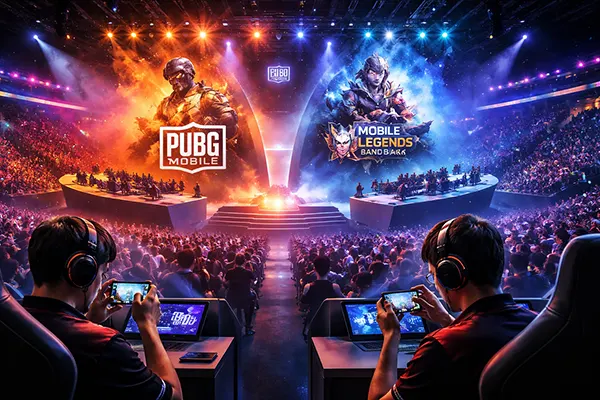
The New Wave of Mobile Esports: What’s Happening with PUBG Mobile, MLBB and Their Leagues in 2025
Mobile esports in 2025 is no longer “the smaller sibling” of PC competition. PUBG Mobile and Mobile Legends: Bang Bang (MLBB) now run mature league ecosystems with partnership models, global circuits, and broadcast standards that look closer to traditional sports than casual gaming. The biggest change is not only prize money or viewership, but the way leagues are structured, financed, and made sustainable for teams and organisers.
PUBG Mobile in 2025: a partnership era and a clearer road to PMGC
PUBG Mobile has been moving towards more stable, franchise-like structures through regional partnership leagues, and 2025 is where that strategy becomes difficult to ignore. In Europe, for example, the PUBG Mobile Super League (PMSL) has clear seasonal splits with offline finals. The Fall 2025 PMSL Europe finals are listed in Istanbul, running from 13 to 26 October 2025, with a prize pool of $200,000. That kind of predictable calendar makes it easier for teams to plan budgets, bootcamps, and roster moves in advance.
The second major shift is how qualification and points systems shape the year. PMSL events act as top-tier “anchors” that feed into global qualification logic, making regional dominance matter more than one-off tournament runs. This reduces randomness and rewards organisations that can maintain form across a full season rather than peaking for a single weekend.
From a viewer perspective, PUBG Mobile production has become more consistent too. A mixture of studio broadcasts, offline finals, and stronger sponsor integration has made the top leagues easier to follow. You can see it in the way events list partners and venues more openly, which signals that organisers are building long-term commercial value instead of treating each tournament as a standalone spectacle.
PMGC 2025: why the global championship still defines the season
Even with strong regional leagues, the PUBG Mobile Global Championship (PMGC) remains the point where narratives “lock in”. According to tournament documentation and coverage, PMGC 2025 is positioned as the final event of the competitive season, and it is also described as part of a broader PUBG United concept that links PUBG Mobile and the PC ecosystem into a single month-long period of major events.
Coverage around PMGC 2025 highlights Thailand as the host location, with detailed breakdowns of schedule and format being published well ahead of time. That matters because PMGC is no longer only a trophy chase; it is the most valuable exposure window for players. A strong PMGC run in 2025 can decide contracts, buyouts, and even which organisations are considered “tier one” going into 2026.
What makes PMGC especially relevant in 2025 is the way it sits at the top of a pipeline that is increasingly professional. For teams, it is not just about qualifying — it is about being ready for a tournament that carries the highest pressure, the biggest audience spikes, and the strongest sponsor interest. In practical terms, that is why teams now build their whole year around peaking for PMGC while still collecting results in partnership leagues that keep the organisation financially alive.
MLBB in 2025: MPL leagues as weekly entertainment, not occasional tournaments
MLBB has arguably become the clearest example of how a mobile title can behave like a modern sports league. The MPL model is built around weekly schedules, recurring matchdays, and consistent team branding. You can see this clearly in official schedules such as MPL Philippines, where fixtures are published across weeks with exact dates and match times, stretching from late August through October 2025. That style of scheduling turns the league into regular viewing rather than a once-in-a-while tournament.
This structure changes how fans follow the game. Instead of “waiting for the next big event”, viewers get a season-long story: rivalries, standings pressure, roster experiments, and adaptation to patch changes. It also helps broadcasters and sponsors because weekly cadence makes advertising inventory predictable and easier to sell.
For teams, MPL’s predictability makes professional operations easier. Organisations can justify full-time coaching staff, analysts, and structured player welfare because they are not living from prize pool to prize pool. While prize money still matters, the true advantage is long-term visibility: teams appear week after week, which is the currency sponsors actually care about.
MSC 2025 at Esports World Cup: MLBB’s international peak and why it matters
In 2025, MLBB’s global showcase is strongly tied to the Esports World Cup circuit. The Mid Season Cup (MSC) 2025 is described as running a Wild Card stage from 10 to 13 July 2025, followed by the main event from 23 July to 2 August 2025. This calendar placement is strategic: it sits mid-year, giving organisations a second “peak” moment beyond domestic MPL titles.
MSC’s significance is not only competitive. It is a brand and scouting environment where regions compare their styles and standards. When teams perform internationally, their domestic leagues benefit too: fan interest rises, sponsorship interest increases, and local matchdays gain extra tension because viewers start measuring teams against international benchmarks.
For MLBB as a whole, MSC 2025 demonstrates that mobile esports can run elite-level global events with multi-stage formats and long broadcast windows. In practical terms, it tells sponsors and investors that mobile can deliver the same structured storytelling and international relevance that PC esports has relied on for years.
The bigger trend: why mobile esports leagues are growing faster in 2025
The “new wave” is not only about bigger events; it is about the business model behind them. Partnership leagues in PUBG Mobile and weekly-season leagues in MLBB are both responses to the same problem: teams need predictable revenue and audiences need consistent storytelling. When that system works, the entire ecosystem becomes more stable, which attracts non-endemic sponsors and supports long-term team planning.
Another reason mobile esports is accelerating is accessibility. Smartphones remove hardware barriers, and this impacts talent discovery. In regions where gaming PCs are less common, the best players can still train at a high level. That widens the talent pool and keeps leagues competitive. In 2025, the results are obvious: more regions produce top-level teams, and international tournaments become less predictable in a good way.
Finally, the broadcast product has improved. The top leagues now rely on clear seasonal calendars, offline finals in known venues, and consistent sponsor placement. When you see PMSL Europe listing venues, sponsors, and fixed dates, or MPL publishing match schedules across many weeks, it reflects an industry that is building long-term trust with fans and partners. In 2025, that trust is the real fuel behind the mobile esports surge.
What to watch next: key signs that 2026 will be even bigger
The first signal will be expansion of partnership models and the number of offline finals. More cities hosting finals usually means stronger local sponsorship and higher confidence from organisers. If you see more PMSL-style events and more venue announcements, it is a strong sign of continued investment.
The second signal is calendar clarity. When organisers publish schedules early — like the MPL fixture lists and the publicly described MSC 2025 stages — it helps teams, media, and fans commit time and resources. Early scheduling is a professional habit that often appears right before a growth phase.
The third signal is how global events connect to regional leagues. PUBG Mobile is increasingly framing PMGC as the climax of a full-year system, while MLBB builds a mid-year international peak through MSC at Esports World Cup. If those pipelines become even more transparent and consistent, 2026 will likely bring a stronger competitive ecosystem, more sustainable teams, and higher-quality events across both titles.