
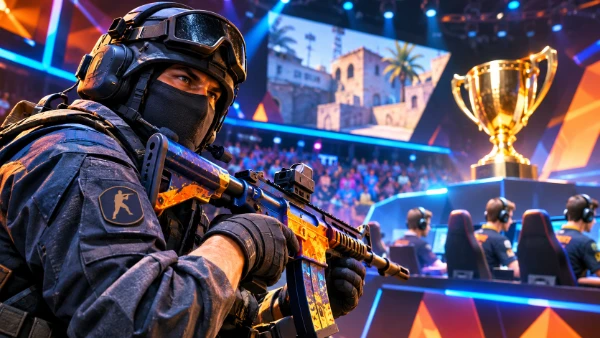
CS2 in 2026: How the Open Tournament Circuit Shapes Top Teams’ Calendars
Counter-Strike 2 entered 2026 with a tournament calendar that gives professional teams more opportunities to compete but also makes planning considerably harder. Valve’s open tournament system has changed how organisations earn invitations, choose events and prepare for the biggest championships. Instead of relying primarily on long-standing relationships with tournament organisers, teams must pay closer attention to their results and positions in the Valve Regional Standings. With ESL, BLAST, PGL and other organisers running major competitions throughout the year, even established teams cannot realistically attend everything. The challenge is no longer simply to secure invitations to prestigious events. It is to build a schedule that protects ranking positions, allows enough preparation time and gives players a realistic chance of performing well at the two Majors.
How Valve’s Open Tournament System Works in 2026
The foundations of the current CS2 tournament system were introduced in 2025, when Valve implemented new requirements for organising professional competitions. The changes reduced the influence of exclusive partnerships and made sporting results more important in determining which teams receive invitations. Previously, certain tournament circuits offered partnered organisations more predictable access to major events. Under the newer approach, tournament organisers must follow published rules governing invitations, qualification opportunities and competitive eligibility. This does not mean every tournament is completely open to every team. Instead, the system combines ranking-based invitations, qualifying competitions and a limited number of other permitted entry routes.
The Valve Regional Standings, commonly known as VRS, are central to this structure. Valve publishes official rankings covering the global Counter-Strike scene and the European, American and Asian regions. These standings help determine which rosters receive invitations to ranked competitions. Tournament organisers must use the relevant official ranking when issuing direct VRS invitations and follow the published selection criteria. The rules also distinguish between Tier 1 and Tier 2 tournaments, allowing different qualification arrangements depending on the event. A team that performs consistently against strong opposition can improve its position and gain access to more prestigious competitions, while a struggling roster may gradually lose opportunities that previously seemed secure.
One important detail is that the rankings concern player rosters rather than simply the organisations employing them. Valve defines a roster through its five players, and directly invited teams generally need at least three members of the invited lineup to participate throughout the tournament. This makes transfer decisions particularly sensitive. Replacing several players may affect an organisation’s ability to use an existing invitation, even if its brand and financial resources remain unchanged. Rankings also introduce another practical consideration: invitations depend on the standings at a particular date, not necessarily on how strong a team appears several weeks later. A successful month can therefore influence participation in future events long after the original matches have finished.
Why Rankings and Open Qualification Change Tournament Access
The most significant difference for professional teams is that tournament access has become more closely connected to recent competitive performance. Under Valve’s published rules, standard Tier 1 ranked tournaments must issue at least 20 direct VRS invitations, subject to approved exceptions. These invitations begin with the highest-ranked eligible rosters from the selected ranking lists. Organisers can also offer qualifying routes, while Tier 2 competitions have greater flexibility to use open qualifiers. This creates opportunities for ambitious teams that are not yet established among the elite. However, the term open circuit should not be confused with guaranteed access: a lower-ranked lineup still has to earn its place through results or the qualification route offered by a particular event.
For teams outside the leading positions, smaller tournaments now serve an additional purpose beyond prize money and match experience. Strong performances can contribute to the competitive record used in the VRS, improving the possibility of receiving invitations to larger events. This gives regional LAN competitions and recognised online tournaments greater strategic importance. A developing European roster, for example, may prioritise several achievable competitions rather than immediately attempting to enter the strongest international field. The aim is to build results against suitable opposition, improve its ranking and eventually qualify for events featuring established organisations such as Vitality, MOUZ, Team Spirit and FURIA.
For leading organisations, the system introduces a different kind of pressure. A high ranking can provide access to major competitions, but it requires continued competitive success. Teams must decide whether another tournament is worth the travelling, preparation and potential fatigue involved. Skipping an event might preserve energy for a more important championship, yet it also means passing up an opportunity to strengthen the results supporting their ranking. The consequences depend on the existing standings, other teams’ performances and the timing of invitation decisions. Successful calendar management therefore involves more than choosing tournaments with the largest prize funds. Coaches and managers need to understand how each competition fits into their team’s wider season.
The 2026 CS2 Calendar Forces Teams to Make Difficult Choices
The 2026 season demonstrates how crowded the international Counter-Strike calendar has become. The opening months featured IEM Kraków, PGL Cluj-Napoca, ESL Pro League Season 23 and BLAST Open Rotterdam, followed by another sequence of competitions in April and May. IEM Rio, PGL Bucharest, BLAST Rivals and further international events offered teams numerous opportunities to compete before the first Major. The schedule included both established tournament series and competitions organised by companies seeking a stronger presence in professional Counter-Strike. For spectators, the result is a steady supply of high-level matches. For the organisations involved, it means coordinating travel, accommodation, training and player availability across several countries within relatively short periods.
One particularly clear scheduling conflict occurred in May 2026. PGL Astana and IEM Atlanta were both scheduled for 11–17 May, making full participation in both competitions impossible for the same five-player lineup. Teams therefore had to consider which event offered the better competitive opportunity, taking into account invitations, opponents, travel requirements and their preparations for the approaching Major. Such clashes illustrate a broader consequence of an open circuit with multiple independent organisers. Although early tournament announcements help organisations plan, they do not guarantee that competing events will avoid overlapping. Teams must increasingly make deliberate choices rather than automatically accepting every attractive invitation.
The two Valve-sponsored Majors remained the central landmarks of the season. IEM Cologne Major took place from 2 to 21 June 2026, while the PGL Major Singapore is scheduled for 24 November to 13 December 2026. Both feature 32 teams and a total prize pool of $1.25 million. Their importance extends beyond the money available: Major participation carries considerable sporting and reputational value. The months preceding each championship consequently become critical periods for maintaining a competitive ranking and finalising preparations. A team that enters too many tournaments may reach a Major physically exhausted, while a lineup that plays too rarely can struggle to maintain match sharpness or strengthen its qualification position.
How Overlapping Events Affect Training, Travel and Player Recovery
Travelling between major CS2 tournaments is more demanding than the dates on a public calendar might suggest. A competition lasting one week can require additional days for international flights, practice sessions, media activities and recovery. The differences between playing in Europe, Asia and the Americas become particularly important when teams compete in consecutive events. Long journeys and changes in time zones can disrupt sleep, training routines and communication within the squad. Even an organisation with sufficient resources to cover every trip cannot eliminate these physical demands. As a result, a successful tournament schedule needs to account for the days surrounding each competition, rather than treating the official match dates as the team’s only commitments.
Preparation time is another major consideration. Professional CS2 teams need regular opportunities to review recent matches, strengthen their map pool, analyse opponents and improve coordination. A roster that spends most of its month travelling and competing may struggle to introduce meaningful tactical changes. This becomes particularly noticeable after a difficult tournament or a player transfer, when the coaching staff needs uninterrupted practice to address weaknesses. Some teams consequently benefit from declining a competition, even if an invitation is available. A short training period can be more valuable than another set of official matches, especially when the next scheduled championship carries greater importance for the organisation’s season.
Player recovery also affects competitive decisions. Long tournament runs involve repeated high-pressure matches, extensive preparation and limited opportunities to switch off. Teams that reach several finals may accumulate more competitive hours than organisations eliminated during the opening stages. This creates an unusual situation in which success can make the following weeks harder to manage. Coaches must consider whether players need individual practice, collective training or genuine time away from competition. The most effective approach varies according to roster experience, recent results and upcoming opponents. There is no universal number of tournaments that a team should attend, but a calendar without meaningful recovery periods carries obvious risks for performance and long-term consistency.

What the Open Circuit Means for Top Teams and Emerging Contenders
For established organisations such as Vitality, MOUZ, Team Spirit, FURIA and G2 Esports, the open circuit changes the importance of tournament selection. These teams generally aim to compete for international trophies rather than merely accumulate appearances. Their managers must evaluate whether individual events support that ambition. Prize money matters, but it is only one consideration alongside ranking implications, the strength of the field and the opportunity to prepare for a Major. A team may choose a familiar European event over a distant competition if the additional travel would interfere with its training schedule. Another organisation might take the opposite approach because it needs more official matches or sees a realistic opportunity to improve its standing.
The system can also reward organisations that respond quickly to changes in form. A team enjoying several strong tournament performances may improve its ranking sufficiently to receive invitations that appeared unlikely earlier in the season. Conversely, a well-known organisation cannot depend indefinitely on its reputation if its results deteriorate. This makes the competitive environment less predictable and gives emerging contenders a clearer incentive to perform consistently. However, established teams retain considerable advantages, including experienced coaching staff, established training facilities and larger travel budgets. The open circuit creates additional routes towards elite competition, but it does not remove the financial and organisational differences between professional teams.
Roster stability is especially important when planning across several invitation periods. A major transfer may improve a team’s prospects in the longer term while creating immediate uncertainty about its competitive position. Organisations must consider both the benefits of recruiting a stronger player and the consequences of changing a lineup during an active tournament cycle. The timing of a transfer can matter almost as much as the transfer itself. Rebuilding shortly before a Major invitation deadline may carry greater risks than making the same change earlier in the season. For this reason, sporting directors need to coordinate roster decisions with coaches, tournament administrators and players rather than treating transfers as isolated personnel matters.
How Teams Can Build a Competitive Calendar Around the Majors
A practical approach to the 2026 calendar begins with identifying the events that matter most to the organisation. For leading teams, the Cologne and Singapore Majors provide natural reference points. Other competitions can then be assessed according to how well they support those targets. A tournament several weeks before a Major might offer valuable practice against strong opponents, but one immediately preceding important preparations could create unnecessary pressure. Teams also need to monitor the official invitation dates published by organisers, since a ranking improvement after the relevant selection date may arrive too late to affect participation. Planning around those deadlines helps organisations understand when results are especially valuable.
Teams seeking to climb the rankings face a different challenge. They need enough official competition to demonstrate progress without spending their entire season travelling between events that offer limited prospects of success. Carefully selected regional tournaments, open qualifiers and suitable Tier 2 competitions can provide opportunities to build experience and improve results. Financial planning is particularly important for smaller organisations, which may have limited funds for flights, accommodation and support staff. Their ideal calendar is not necessarily the busiest one. It is a manageable sequence of competitions in which the roster can perform consistently, develop its map pool and gradually earn opportunities against stronger opponents.
The final months of 2026 underline why flexibility remains essential. Following autumn events such as ESL Pro League Season 24, PGL Masters Bucharest, IEM Beijing and BLAST Rivals, attention turns towards the Singapore Major. Teams entering that period must balance the competitive value of their remaining matches against the need to arrive prepared for the championship. The open circuit has made this balancing act a permanent part of professional Counter-Strike. More organisers and ranking-based opportunities can create a healthier competitive environment, but they also require greater discipline from the organisations taking part. Ultimately, the teams best equipped for the modern CS2 calendar are those capable of combining strong results with sensible scheduling, stable rosters and enough preparation time to perform when the most important matches arrive.