
Esports and Doping: Real Cases Involving Stimulants and How Tournaments Control Them
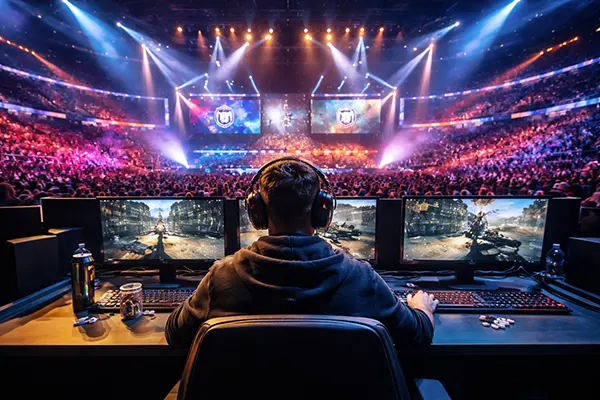
Competitive gaming has matured into a global industry with multi-million prize pools, packed arenas and strict professional standards. As esports moved closer to traditional sport in scale and visibility, it also inherited some of its darker challenges. One of them is the use of stimulants to enhance focus, reaction time and endurance during long tournaments. By 2026, anti-doping discussions in esports are no longer theoretical. There have been confirmed cases, public admissions and formal testing policies introduced by major organisers. Understanding how stimulant use affects performance — and how tournaments attempt to regulate it — is essential for anyone following the competitive scene.
Documented stimulant cases in professional esports
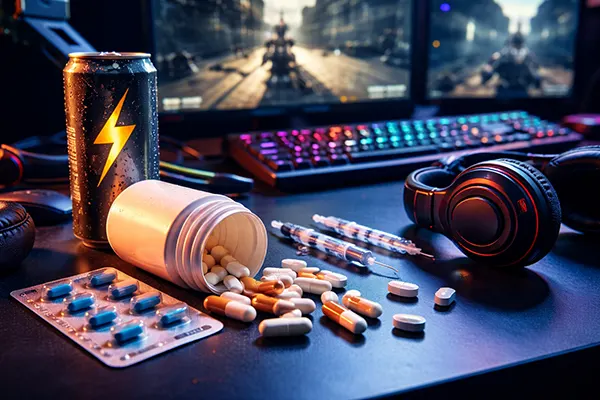
The most widely cited case remains the 2015 admission by Kory “Semphis” Friesen, a former Counter-Strike: Global Offensive professional. In an interview, he openly stated that his team had used Adderall during a major tournament. Adderall, a prescription medication containing amphetamine salts, is commonly prescribed for ADHD but can enhance alertness and concentration in healthy individuals. The admission triggered immediate controversy and forced organisers to reconsider their regulatory frameworks.
In the years that followed, other players across different titles, including Counter-Strike and Call of Duty, informally acknowledged stimulant use within the scene. While not all cases resulted in formal sanctions, they reinforced the perception that cognitive enhancement drugs were circulating in competitive environments. By the early 2020s, discussions around “focus pills” were no longer whispered rumours but part of open industry debate.
It is important to distinguish between confirmed anti-doping violations and anecdotal claims. Unlike athletics, esports historically lacked unified drug testing standards. This meant that for years, enforcement varied significantly between organisers. However, after 2020, especially in top-tier Counter-Strike and League of Legends events, structured anti-doping measures began to appear more consistently.
Why stimulants are seen as performance enhancers in gaming
Unlike traditional sports, esports relies heavily on reaction speed, sustained concentration and decision-making under pressure. In high-level Counter-Strike or Valorant, reaction times of 150–200 milliseconds can determine the outcome of a round. In multiplayer online battle arenas, strategic clarity over matches lasting 40 minutes or more is crucial. Stimulants such as amphetamine-based medication can temporarily increase alertness and reduce fatigue.
Scientific research into prescription stimulants shows measurable effects on attention span and cognitive endurance in both clinical and non-clinical populations. However, improvements in raw reaction time are less clear-cut. The real advantage often lies in mental stamina during long match days, particularly at LAN events where teams may play several series back-to-back.
There are also risks. Stimulant misuse can cause elevated heart rate, anxiety, sleep disruption and dependency. For young professional players — many of whom enter top competition in their late teens — unmanaged use presents serious health concerns. This is one of the reasons tournament organisers have gradually aligned with recognised anti-doping frameworks.
How major tournament organisers regulate doping
The Electronic Sports League (ESL) was among the first major organisers to publicly partner with the World Anti-Doping Agency (WADA) after the Semphis admission in 2015. ESL adopted WADA’s prohibited substances list as a reference point and introduced in-competition drug testing at selected events. Testing was initially limited but symbolically significant, marking a shift toward formal governance.
By 2026, ESL Pro Tour events, including IEM and ESL One competitions, maintain anti-doping regulations that allow for random testing during offline tournaments. Players may be required to provide samples under controlled conditions. Violations can result in suspensions, disqualification and financial penalties. Importantly, therapeutic use exemptions (TUEs) are recognised for players with legitimate medical prescriptions.
Riot Games, organiser of League of Legends World Championship and Valorant Champions Tour, applies its own competitive integrity policies. While Riot does not publicly detail every aspect of its testing procedures, its rulebooks include clauses covering the use of performance-enhancing drugs. Internal compliance investigations and contractual obligations provide additional enforcement mechanisms.
Therapeutic use exemptions and compliance procedures
Because medications like Adderall are legally prescribed for ADHD, outright bans without medical review would be inappropriate. Therefore, leading organisers allow players to submit medical documentation in advance of events. A therapeutic use exemption confirms that the medication is necessary and monitored by a healthcare professional.
The exemption process typically involves confidential submission of medical records to a designated integrity or compliance officer. Approval must be obtained before the competition begins. If a player tests positive for a substance but holds a valid exemption, sanctions may not apply, provided usage aligns with declared dosages.
Compliance procedures in 2026 are more structured than a decade earlier. Contracts signed by professional teams often include clauses requiring adherence to tournament anti-doping policies. Teams themselves increasingly employ sports psychologists and performance coaches who promote regulated, health-centred approaches rather than pharmaceutical shortcuts.
Ongoing challenges and the future of anti-doping in esports
Despite progress, esports still lacks a single global governing body equivalent to those in Olympic sport. Different publishers control their own ecosystems. This fragmented structure complicates standardisation of anti-doping rules across all titles. A player suspended in one circuit may not automatically face identical consequences elsewhere unless organisers coordinate policies.
Another challenge lies in detection scope. Testing is typically limited to offline events due to cost and logistics. Online qualifiers, which form a significant part of competitive ecosystems, rarely involve physical drug testing. As a result, enforcement remains strongest at tier-one LAN tournaments.
There is also the broader ethical question of cognitive enhancement beyond prescription stimulants. Nootropics, high-dose caffeine regimens and other supplements occupy a grey area. Most are legal and widely available, making it difficult to draw a clear regulatory boundary between acceptable preparation and unfair advantage.
Health protection and competitive integrity in 2026
By 2026, the conversation has shifted from scandal to structured prevention. Leading organisations frame anti-doping not only as an integrity issue but as a player welfare concern. Educational workshops at major events now address sleep hygiene, stress management and responsible supplement use.
Teams competing at the highest level increasingly mirror traditional sports clubs in their infrastructure. Nutritionists, physiotherapists and mental performance specialists are becoming standard in elite rosters. This professionalisation reduces reliance on improvised performance enhancement strategies.
While esports may never replicate every aspect of Olympic anti-doping governance, it has moved decisively beyond informal tolerance. Real stimulant cases forced the industry to respond. Today, formal rules, testing frameworks and medical exemption systems are part of top-tier competition. As prize pools and public scrutiny continue to grow, maintaining transparent and enforceable anti-doping standards remains essential for the credibility of competitive gaming.