
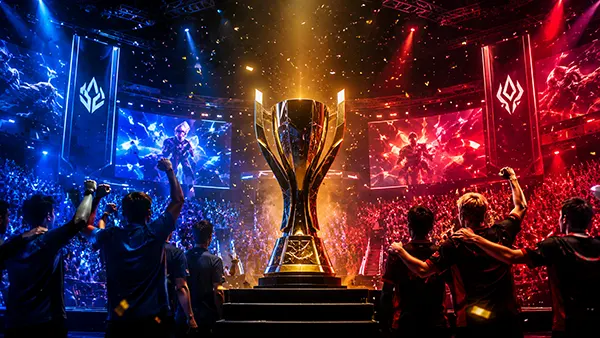
Esports World Cup 2026 Prize Pool Reaches $75 Million: How It Is Reshaping Competition Between Clubs
The Esports World Cup 2026 has become one of the most significant developments in the history of competitive gaming. With organisers confirming a total prize pool of $75 million, the tournament has moved beyond being a major esports event and has become a financial benchmark for clubs, investors, sponsors and professional players. The scale of the funding exceeds the annual prize distributions of many established esports circuits and is encouraging organisations to rethink how they recruit talent, manage budgets and compete across multiple game titles.
The Financial Impact of a $75 Million Prize Pool
The announcement of a $75 million prize pool changes the economics of esports organisations. For many clubs, tournament winnings have traditionally represented only a portion of annual revenue, with sponsorship agreements, merchandise sales and media partnerships providing greater stability. However, the possibility of securing multi-million-dollar rewards from a single event increases the strategic importance of competitive performance.
Large organisations are already investing more heavily in coaching staff, performance analysts, sports psychologists and data specialists. These resources were once concentrated among a small number of elite clubs, but the financial incentives attached to the Esports World Cup encourage broader investment throughout the industry. The difference between reaching the final stages and an early elimination can now represent several million dollars.
The size of the prize pool also attracts additional commercial attention. Brands that previously viewed esports sponsorship as a niche marketing activity now have greater confidence in the sector’s long-term visibility. Increased sponsorship revenues allow clubs to expand infrastructure and improve player development programmes, creating a cycle of higher investment and stronger competition.
Why Multi-Title Organisations Gain an Advantage
The Esports World Cup rewards clubs that can compete successfully across multiple game titles. Unlike tournaments focused on a single discipline, the event encourages organisations to maintain strong rosters in games such as Counter-Strike 2, Dota 2, League of Legends, VALORANT, Mobile Legends: Bang Bang, Apex Legends and other leading esports titles.
This structure favours organisations with established international operations. Clubs capable of supporting several professional teams simultaneously can accumulate points throughout the competition and improve their chances of earning additional club-based rewards. As a result, many organisations are diversifying their portfolios rather than concentrating resources on a single title.
Smaller clubs face a more difficult challenge. While they may achieve success in one discipline, competing against organisations with broad competitive ecosystems requires greater financial backing and organisational depth. This may encourage partnerships, mergers or external investment as smaller clubs seek ways to remain competitive.
Changes in Player Recruitment and Transfer Activity
The growing financial value of elite tournaments is having a direct effect on the player market. Leading clubs are increasingly willing to pay substantial transfer fees to secure proven talent before major international competitions. High-profile players are viewed not only as competitive assets but also as commercial investments capable of attracting audiences and sponsors.
Contract negotiations have become more sophisticated. Performance bonuses, revenue-sharing arrangements and long-term retention clauses are now common among elite organisations. Clubs are attempting to protect their investments while ensuring that players remain motivated throughout lengthy competitive seasons.
The international nature of esports also means that recruitment is becoming more global. Organisations regularly scout talent from emerging regions, including Southeast Asia, South America, the Middle East and Eastern Europe. A larger prize pool increases the value of discovering exceptional players before they become established stars.
The Rising Importance of Youth Development
Many clubs recognise that relying exclusively on expensive transfers is not sustainable. As a result, academy programmes and youth development systems are receiving greater attention. Developing talent internally can reduce recruitment costs while creating a pipeline of future professionals.
Several organisations now operate structured training environments that resemble traditional sports academies. Young players receive coaching, strategic education, fitness guidance and media training. These programmes are designed to prepare prospects for the demands of international competition.
The Esports World Cup creates additional incentives for long-term player development. Organisations capable of producing elite talent internally may gain a competitive advantage over rivals that depend primarily on acquiring established stars from other teams.
How Competitive Balance Could Change in the Coming Years
The concentration of financial rewards raises important questions about competitive balance. Wealthier organisations may gain access to better facilities, larger support staffs and stronger player rosters, making it more difficult for newcomers to challenge established leaders. This pattern has been observed in many traditional sports and may become more visible within esports.
At the same time, esports remains more accessible than many conventional sporting industries. Skilled players can emerge from virtually any region and rapidly gain international recognition through online competition. This creates opportunities for new organisations to challenge dominant clubs despite differences in budget size.
The long-term impact will depend on how effectively clubs use additional resources. Financial investment alone does not guarantee success. Strategic decision-making, team culture, player management and adaptability remain critical factors in achieving consistent results at the highest level.
The Future of Global Club Competition
The Esports World Cup 2026 is likely to accelerate the professionalisation of the esports industry. Organisations are increasingly operating with business structures comparable to those seen in traditional sports, including dedicated management teams, performance departments and commercial divisions.
International competition between clubs is expected to intensify as more investors enter the market. The possibility of securing a share of a $75 million prize pool creates strong incentives for organisations to expand their global presence and improve competitive standards across multiple disciplines.
Rather than simply increasing tournament winnings, the Esports World Cup is redefining how clubs measure success. Competitive performance, organisational depth, player development and commercial growth are becoming increasingly interconnected, making the event one of the most influential forces shaping esports in 2026 and beyond.